
Iran Hits Ras Laffan, Home of the World's Largest LNG Terminal
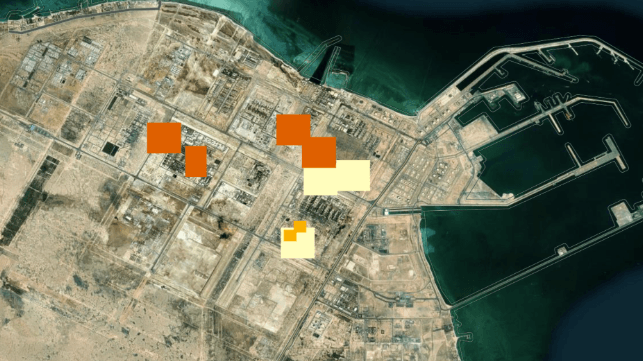
Qatari state petroleum company QatarEnergy has reported an Iranian attack on the natural gas hub at Ras Laffan Industrial City, home of the world's largest LNG export terminal. The attack follows an Israeli strike on facilities serving Iran's South Pars field, the largest natural gas reservoir in the world; South Pars' reserves are shared by Qatar, and the mutual interest in its lucrative gas has underpinned the working relationship between the two states for decades - a relationship which is now under wartime strain.
QatarEnergy’s Ras Laffan Industrial City to the north of Doha, Qatar's main site for the production of liquefied natural gas and gas-to-liquid, as well as the largest export terminal for LNG in the world, has been heavily targeted tonight by ballistic missiles fired by Iran.… pic.twitter.com/Ax9WaOjDAK
— OSINTdefender (@sentdefender) March 18, 2026
QatarEnergy said in a statement that the Ras Laffan facility sustained "significant damage" in the missile strikes, and that the full scale of the effects were still being evaluated. Bystander videos suggest at least two separate fires resulting from the attack, corroborated by NASA FIRMS infrared heat signatures covering new areas of the plant (areas that do not normally have large heat signatures).
The exact nature of the damage was not immediately clear, and Ras Laffan has multiple functions with varying levels of importance to international energy trade. The site houses gas-fueled water and power plants, which provide the Qatari state with desalinated water and much of its electricity; natural gas liquids separation plants; and LNG liquefaction trains, which feed cryogenically chilled gas to a nearby loading pier.
Any damage to the trains could have serious ramifications for the global market: QatarEnergy produces about one-fifth of the world's LNG supply, all in one location. European gas prices jumped by about 10 percent following the news, reflecting the EU's dependence on imported LNG.
QatarEnergy previously suspended exports from the LNG terminal due to the risk of a strike like the one experienced Wednesday.
"The State of Qatar expresses its strong condemnation and denunciation of the blatant Iranian attack targeting Ras Laffan Industrial City, which caused fires resulting in significant damage to the facility," Qatar's foreign ministry in a statement, noting Doha's neutrality in the war. "The Iranian side continues its escalatory policies that are pushing the region toward the brink and drawing countries not party to this crisis into the conflict zone."
Sheikh Nawaf Al-Thani, a former Qatari general who now heads the Council on International Mediation, called the strike "a reckless and dangerous escalation."
"When LNG facilities are brought into the line of fire, this is no longer just a regional conflict, it is a direct threat to global energy security," he said.
The attack follows Israeli strikes earlier in the day at Asaluyeh, Iran, a processing hub for gas from the South Pars field. South Pars supplies about 80 percent of the natural gas for Iran's domestic market; it is not exported, but rather used for electricity generation and domestic pipeline gas.
A U.S. defense official confirmed to Axios that the Israeli strike on South Pars was approved in advance by the White House.

that matters most
Get the latest maritime news delivered to your inbox daily.
Danny Citrinowicz, former chief of the Iran desk for Israeli Defense Intelligence, said Wednesday that Iran's heavy retaliatory strikes were foreseeable.
"What exactly did they think would happen? That Iran would capitulate? That it would open the Strait of Hormuz under pressure?" he said. "The very foundation of this campaign appears to rest on a profound misunderstanding and a severe underestimation of Iran. . . . If these assumptions guided decision-making, then the trajectory from here is not stabilization, it is escalation."