
Norwegian Cruise Line Holdings is Pursuing Fleet Modernization
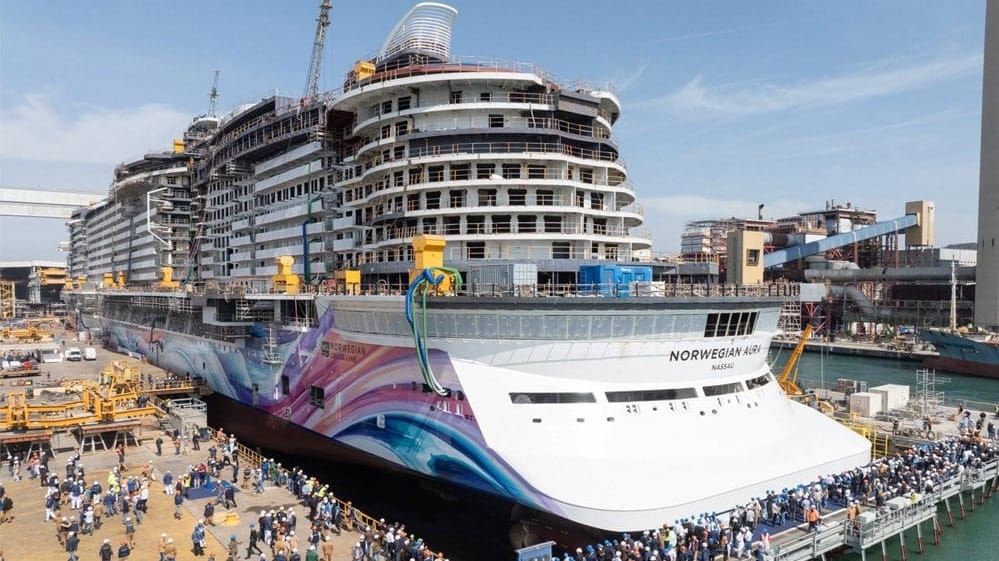
Norwegian Cruise Line Holdings, the public parent company of Norwegian, Oceania, and Regent Seven Seas, is moving forward with a unique fleet modernization program that includes one of the industry’s most aggressive orderbooks. The strategy is unique among the largest cruise corporations, currently calling for an investment of nearly $20 billion that will see brands such as Oceania Cruises reworked over the next decade as older ships leave the fleet.
The broad market contemporary brand, Norwegian Cruise Line, is delivering the first of its two oldest ships to a new line in a matter of weeks and the second one in a year. Regent Seven Seas in 2027 will hand over its oldest ship, while Oceania Cruises completed in July its second charter deal to hand over an older ship. Today, the corporation has 35 ships (Norwegian Cruise Line 21, Oceania 8, and Regent 6 ships) with an orderbook that shows 16 new ships by 2037, but five ships are scheduled to leave the fleet between 2026 and 2028.
Among the contemporary brands, Norwegian Cruise Line’s orderbook is second only to MSC Cruises; nearly 33,000 berths versus approximately 49,000 berths MSC would add if it completes its order at Meyer Werft beyond the World Class being built in France. Royal Caribbean International has 31,100 berths under firm orders and Carnival Cruise Line around 30,000 berths. Norwegian Cruise Line is set to introduce its largest cruise ship yet, Norwegian Aura (170,000 gross tons), in 2027, followed by a sistership in 2028, and then move to a new class of five ultra-large cruise ships, each 227,000 gross tons, between 2030 and 2037. The broad market brand will add 32,760 berths to a brand that currently has approximately 63,300 berths on 21 ships.
“We initiated a fleet optimization strategy focused on addressing older vessels and enhancing long-term efficiency,” NCLH writes in its investor filings. Beyond the first ships set to depart the fleet, and a sixth that will be renovated and repositioned, NCLH reports, “We continue to evaluate strategic alternatives for other older vessels in the fleet, including potential sales or long-term charter arrangements.”
After the acquisition of Norwegian Cruise Line by Genting Hong Kong, they worked to aggressively remake the fleet in the early 2000s and for a time boasted that they had the youngest fleet in the industry. Norwegian acquired Regent Seven Seas Cruises and Oceania 15 years later in 2014. Both brands also added new ships built by Fincantieri.
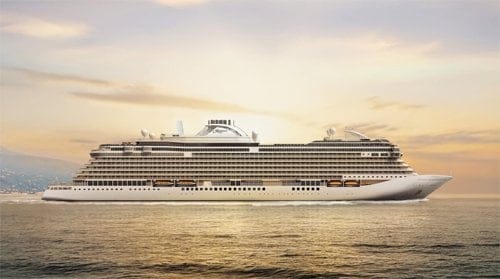
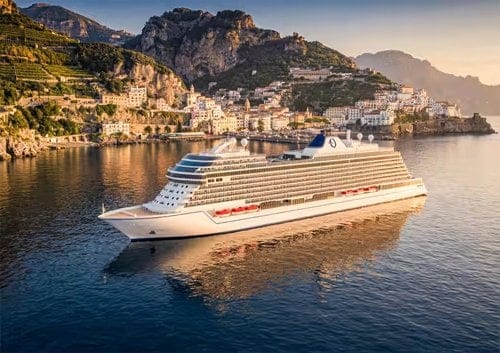
New classes have been ordered both for Regent Seven Seas Cruises (top) and Oceania Cruises (bottom)
Other cruise corporations pared back their fleets, removing their oldest ships during the pandemic shutdown. Carnival Cruise Line sold six ships from its Fantasy Class (70,000 gross tons) while the corporation sold more than 20 cruise ships in the same time frame. Royal Caribbean International had already sold two of its older ships to the UK’s Marella Cruises and sold two more during the pandemic. Neither of the brands, nor MSC Cruises, has announced plans to retire any of their older cruise ships in the near term, although Royal Caribbean’s new Discovery class due in 2030 is rumored to be replacements for older ships.
NCLH’s CEO John Chidsey told analysts on the July conference call that NCLH’s strategy is “sharpening brand positioning, elevating the product and guest experience, and strengthening commercial performance over time.” CFO Mark Kempa added that they are not simply adding capacity with the newbuilds but will improve fleet quality through the fleet optimization strategy.
It begins in the coming weeks as Norwegian Cruise Line hands over its oldest cruise ship, Norwegian Sky. Acquired as an incomplete hull originally ordered for Costa Cruises, the 77,000 gross ton cruise ship with just over 1,900 berths was introduced in 1999 as the brand’s first new cruise ship in years. She pre-dated the Freestyle Cruising initiative and had to be adapted, but lacked some of the options built into the later ships. Norwegian was so pleased with Norwegian Sky that it ordered a second ship, Norwegian Sun, which was introduced in 2001 with only small changes to the design.
Both of the ships are going to India-based Cordelia Cruises under long-term charters. Norwegian Sky is delivering in the coming week, and relaunches as Cordelia Sky, while Norwegian Sun is delivered in 2027 to become Cordelia Sun. The ships are under 10-year bareboat charter agreements that include nominal purchase options.
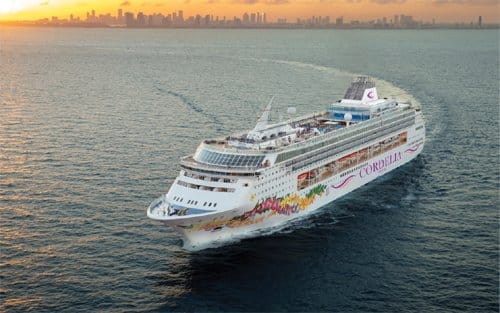
Mockup of the new livery for Norwegian Sky when she arrives in India in October on a long-term charter (Cordelia Cruises)
A deal had been struck for Regent’s Seven Seas Navigator to become a residential ship, but that fell through and was quickly replaced with a similar deal with an offshoot from Villa Vie Residences. A second, more upscale residential program named Avora Residences launches in 2028. To be renamed Avora Lumina, the 28,550 gross ton ship was introduced in 1999, built on the incomplete hull of a Soviet-era ship. She is on a nine-year lease that would provide NCLH approximately $100 million in payments and has a purchase option.
The most aggressive changes, however, come at Oceania, where NCLH CEO Chidsey says they are moving to align the fleet with the luxury positioning. He calls the move a “deliberate portfolio action … that better supports the brand’s positioning and long-term return profile.”
Oceania had been launched in the early 2000s, ultimately acquiring four 30,000 gross ton sister ships, each with a capacity of around 700 passengers. Two of the ships are now slated to leave the fleet. Oceania Regatta starts a two-year charter late in 2026 operating for an Australian tour company. The charter can be extended, or the ship can be sold to a third-party cruise operator. In July, NCLH also announced it has sold the sistership Oceania Sirena, which will be delivered to its new owners by September 30. The ship will be chartered back to Oceania to complete scheduled cruises until the spring of 2028. Oceania had also entered into a deal for a third sister, Oceania Insignia, to become a residential cruise ship in 2027, but that deal was canceled.
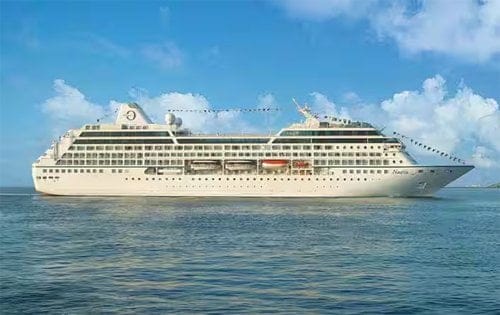
Oceania is disposing of its oldest ships, with two set to leave the brand and a third being reworked for long cruises (Oceania)
NCLH says it elected to retain and materially reposition the last of the sisters, Oceania Nautica, which will be “reimagined” as Oceania Aurelia in 2027 for the luxury long cruise market. The ship’s accommodations will be reworked with 179 of the ship’s 238 cabins designed as suites. The total number of cabins is being reduced from 340 to 238 as they enlarge rooms to create more suites.
that matters most
Get the latest maritime news delivered to your inbox daily.
Historically in passenger shipping, lines looked to replace ships after they reached 20 years of service, but this has been extended in the modern industry to provide for more capacity and address the rising cost of ships. In addition, many of the second-tier operators that historically had been a market for older ships no longer exist in the industry, unable to compete against the big corporations.
For now, NCLH is the only one of the companies actively pursuing a fleet optimization strategy. However, as with the broader commercial shipping industry, with so many ships aging and pressure from environmental and emissions regulations, speculation continues that more lines will need to pursue replacement programs for their older ships.