
Cambodia's Blue Economy Problem
From disputed borders to illegal fishing, Cambodia’s maritime challenges threaten its economic future.
[By Nory Ly]
Cambodia isn’t typically thought of as a coastal nation. But its shoreline of 435?kilometers alongside the Gulf of Thailand comes with 55,600?km² of exclusive economic zone (EEZ), making maritime security to support fisheries, ports, tourism and potential energy resources a crucial feature of the country’s future prosperity.
Yet Cambodia remains geographically disadvantaged, lacking full high-seas access and naval capacity. Without greater attention to its blue economy and maritime governance, Cambodia risks missing jobs and revenue, and exposing itself to security and environmental vulnerabilities.
Cambodia must adopt a comprehensive maritime focus to drive sustainable economic growth, safeguard sovereignty and security, and fulfil international or regional commitments on ocean sustainability.
Cambodia’s marine resources already contribute roughly 16% of GDP (US$2.4?billion) and about 3.2?million jobs, with fisheries alone a considerable proportion. A recent surge in port throughput underlines trade potential to diversify Cambodia’s economy beyond agriculture and manufacturing.
Yet Cambodia’s maritime borders with Vietnam and Thailand are only partly demarcated. Overlapping EEZ claims and the presence of offshore resources create latent tensions.
Cambodia also faces transnational threats, including smuggling and piracy via sea routes from other Southeast Asian countries. Illegal, unreported and unregulated fishing is a further challenge, with dozens of illegal fishing boats crossing into Cambodia’s territorial waters.
The lack of a coast guard limits patrols and law enforcement. A stronger maritime posture would deter encroachments and secure the sea lanes vital for trade.
In addition, healthy marine environments buffer storm damage and support tourism. Cambodia is obliged via its membership of the Association of Southeast Asian Nations to manage its oceans sustainably. Emphasising maritime stewardship will help Cambodia adapt to sea-level rise and meet international environmental standards.
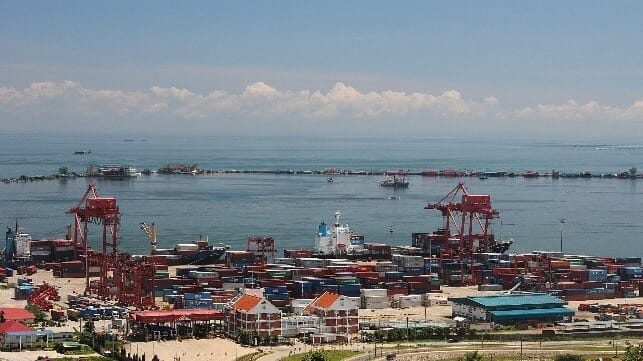
Establishing a high-level “Blue Economy” roadmap aligned with ASEAN would offer Cambodia considerable benefits. This can include investing in key sectors such as modernising Sihanoukville and Phnom Penh ports. Coastal tourism and support for sustainable aquaculture are also areas for development, along with marine R&D and vocational training for fisheries and ocean industries, potentially with public–private partnerships.
Institutional limits must also be overcome. Funding is a constant challenge, along with overlapping agency mandates and the need to balance growth with conservation. Corruption risks in resource exploitation must be managed, while rural communities may resist change without alternatives.
As an initial step, Cambodia should allocate funds from its defense budget to procure patrol vessels and surveillance equipment for the Royal Cambodian Navy and a newly formed coast guard. This can be achieved alongside expanded personnel training within ASEAN and bilateral assistance. That training can be augmented by conducting regular joint patrols and exercises with neighbouring Vietnam and Thailand.
Cambodia must also hasten the finalisation of disputed maritime boundaries or joint-development agreements to reduce ambiguity. It should also look to develop legal frameworks for fisheries and maritime crime enforcement on top of the current 2025 Law on Fisheries.
Cambodia’s recent ratification of UNCLOS and other key treaties marked a major step in the country’s commitment to maritime governance. But internal coordination is also crucial. There are few trained maritime specialists in the bureaucracy, so limited technical expertise might hinder progress. Assistance from ASEAN as well as global agencies such as the International Maritime Organisation or World Bank could assist in this regard. The National Committee on Maritime Security (NCMS) is intended to enhance Cambodia’s maritime interests but, its coordinating function across areas of defence, fisheries, environment and transport could be strengthened.
The way forward, therefore, is to treat “maritime focus” as a whole-of-state modernisation project rather than a narrow naval agenda.
that matters most
Get the latest maritime news delivered to your inbox daily.
This article appears courtesy of The Lowy Interpreter and may be found in its original form here.
Top image: Sihanoukville Autonomous Port (Dmitry Makeev / CC BY SA 4.0)

The opinions expressed herein are the author's and not necessarily those of The Maritime Executive.