
Antarctica Could Get its First Subsea Data Cable
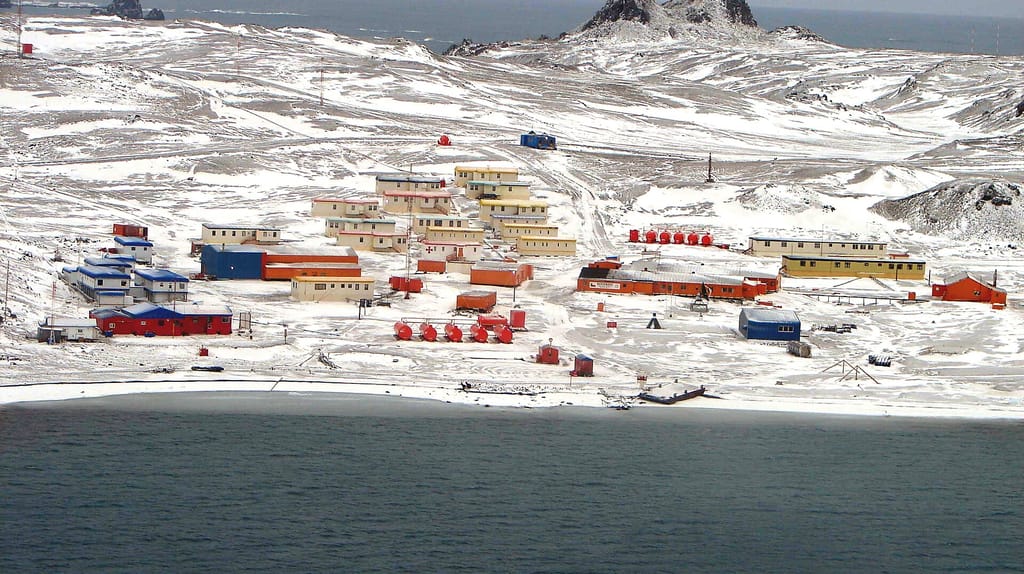
Chile has achieved a significant milestone in a project likely to see Antarctica get connected to the global fiber-optic network. Last week, a feasibility study assessing the Antarctica cable system was finalized, confirming technical viability of the project. The study began last year in February, led by Salience Consulting and Pioneer Consulting on behalf of Chile’s telecommunications regulator Subtel. The exercise was financed by the Development Bank of Latin America and the Caribbean (CAF) and the Chinese state-backed Multilateral Cooperation Center for Development Finance (MCDF).
With Chile leading the efforts, the digital infrastructure project in Antarctica is seen as an important pillar for scientific research interests in the region. Currently, Antarctic science leaves the continent in suitcases full of hard drives, said Juan Pablo, who is one of the team leaders in the Antarctica cable pre-feasibility study.
“With the cable, the data will travel in real time. And with smart sensors integrated into the fiber, the cable itself becomes a scientific instrument: temperature, pressure and seismic activity, measured live from the bottom of the Drake,” added Pablo.
For over a year, the team assessed 55 Antarctic facilities, providing several key findings in close to 2,000 pages of the final report. The cable will be connected to Antarctica from Chile’s Magallanes region through the Drake Passage. The study mapped out two deployment routes for the connection, divided into stages based on length and cost.
The first is the base route, which connects Punta Arenas and Punta Williams with the three Chilean Antarctic bases at a cost $370 million. The length of this connection will be about 1,600 kilometers. The other route is the full configuration that would extend for about 4,100 kilometers, with nine landing points in Antarctica. This would see Antarctic bases from five countries connected including Argentina, Brazil, United States and the United Kingdom. The complete route is estimated to cost $620 million.
However, the study noted that although the technology to implement this project already exists, the difficult part will be to mobilize financing and political will. Chile has to get buy-in from the other Antarctic states.

that matters most
Get the latest maritime news delivered to your inbox daily.
The feasibility study has been submitted to Chile’s Ministry of Foreign Affairs. The ministry is expected to present a report of the findings to the nation’s Antarctic Policy Council for final deliberations. If a decision to proceed is reached, the Council will lead international coordination efforts to onboard the other Antarctic states. Factoring these international agreements, the cable project is estimated to take around eight years.
Top image: Chile's Base Presidente Eduardo Frei Montalva (Mefisto29 / CC BY SA 4.0)
