
Insurance and Naval Escorts May Not be Enough to Reboot Gulf Shipping
War risk at the Strait of Hormuz continues to deter shipowners from venturing near to Iran, and AIS-active traffic remains 90 percent below normal levels, according to MarineTraffic. Despite the hazards, a handful of owners are willing to make the run and join the 3,200-strong fleet inside of the high-risk zone of the Arabian Gulf.
"Stop trying to pass the Strait of Hormuz," security consultant Martin Kelly of EOS Risk Group implored shipowners. "There [have] been at least 10 attacks against shipping in 72 hours. At least one person dead, and at least one ship abandoned. . . . Please, defer transit."
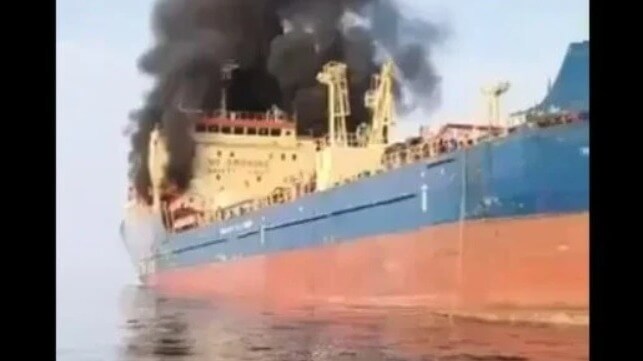
Iran's strikes on shipping multiplied over the course of Tuesday and Wednesday, according to UKMTO. Six incidents were reported on March 3-4: a hit on the bulker Gold Oak off Fujairah, resulting in hull damage; a hit on the tanker Libra Trader off Fujairah, resulting in minor damage; a near-miss spotted by the container ship MSC Grace off Dubai; a close-in near miss on an unnamed vessel in the Gulf of Oman, nearly 140 nm offshore; a serious hit aboard the boxship Safeen Prestige in the Strait of Hormuz, resulting in a fire in the engine room and a decision to abandon ship; and (most recently) an apparent small-boat commando attack on a tanker 30 nm south of Kuwait, resulting in a blast and an oil spill.
A U.S. pledge to provide insurance for shipping in the region may help from a business standpoint, if it can be actualized, but improved physical security is likely a requirement for sustained commerce at scale. "Insurance may incentivize a few to start transiting but the Iranians will likely attack and then traffic will again cease transit," Odin head analyst Alpman Ilker told Argus Media.
Physical security have to await the resolution of the conflict. Odds of a naval escort mission appears limited given the intensity of ongoing combat in the Gulf region and the availability of resources. Most of the attacks to date have occurred far outside the Strait of Hormuz, at locations from Kuwait to Salalah. Any U.S. Navy assets tasked to escort duty would have to spend days in range of Iranian missiles and drones, requiring the crews to defend themselves as well as their convoys.

that matters most
Get the latest maritime news delivered to your inbox daily.
"The Red Sea precedent is instructive: 15 months of 'Operation Prosperity Guardian' escorts failed to restore commercial traffic despite 400 drones/missiles downed," commented analysts with SSY Global in a new research note. "[At Hormuz] physical geography favors the attacker. TSS lanes are two nm wide each direction; vessels transit at 10–12 knots and must turn at the narrowest point adjacent to Iranian islands. A destroyer can intercept missiles but cannot simultaneously sweep mines, counter drone-boat swarms from multiple bearings, and manage GPS disruption."
The shadow fleet tankers that serve Iran have no such security concerns, at least based on satellite imagery. The loading berths at Kharg Island are still running at full rate, according to TankerTrackers.com.