
Maersk Predicts Difficult Times for Industry After a Strong Performance
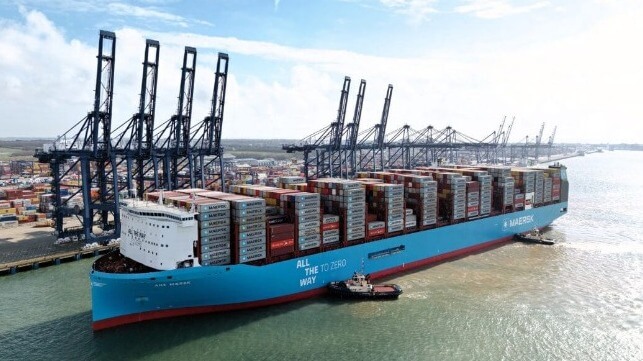
Maersk, long considered a bellwether of the container shipping industry and broader global economy, presented a bleak near-term outlook as it reported 2025 financial results. The company pointed to the continued uncertainties in global trade as well as a growing overcapacity in container shipping, which it foresees contributing to further declines in freight rates and its earnings outlook.
While posting a strong overall performance in 2025, which included nearly five percent volume growth for ocean shipping and terminals that achieved record volumes, revenues, and EBIT, the company reported continued declines in freight rates, which contributed to sharply lower earnings. Average freight rates were down more than 20 percent year-over-year and approximately eight percent in sequential quarters in the fourth quarter, which the company attributed to driving its shipping segment to an earnings loss (EBIT) of $153 million in the quarter. The company overall reported $13.3 billion in revenues with earnings (EBIT) of just $100 million. (EBITDA $1.8 billion).
The company reached the top of its forecast for 2025, in part as the return to Red Sea routes was delayed and continued to drive utilization. It reported full-year revenues of $54 billion with earnings on an EBIT basis of $3.5 billion (EBITDA $9.5 billion).
CEO Vincent Clerc, however, presented a bleak picture to investors during the company’s conference call. He said they expected that global container volume would grow between two and four percent this year, but said they expected “container shipping rates to develop adversely.”
One key concern is overcapacity, both from the new ships entering the market and the six-year deferral at scrapping older ships. He forecast an overcapacity of between four and eight percent in 2026, saying “you will need to see some scrapping” for the overcapacity to be reduced.
The overcapacity, he said, could be further exacerbated if the return to Red Sea routes comes faster than anticipated and in turn further pressure rates. He still expects a gradual return to the routes through the Suez and Red Sea and pointed out that it would make slower steaming possible and contribute to lower costs.
Maersk’s forecast for 2026 presented a worst-case scenario, which could see a financial loss of $1.5 billion (EBIT) and a best-case scenario of a profit of $1.5 billion. Cash flow could also be negative, and to reduce depreciation, the company made a change in the estimated useful lives of vessels from 20 to 25 years, effective January 1, 2026.

that matters most
Get the latest maritime news delivered to your inbox daily.
Clerc points to steps to reduce corporate overhead, continuing a trend of headcount reductions across the company. For 2026, he said Maersk would cut around 15 percent (1,000 positions) from a global corporate workforce of 6,000 and a total workforce of more than 100,000. This follows broader reductions that started in 2023. The forecast is that Maersk will reduce corporate expenses by $180 million with these latest headcount reductions.
The company is also reorganizing its logistics segment into groups focused on landside, forwarding, and solutions. To demonstrate faith and support the stock price, the company also initiated a new share buy-back program. The company’s shares were able to claw back some of their early losses, but still closed the day down four percent.