
Major Scrap Metal Fire Breaks Out Aboard Bulker at Port of Newport
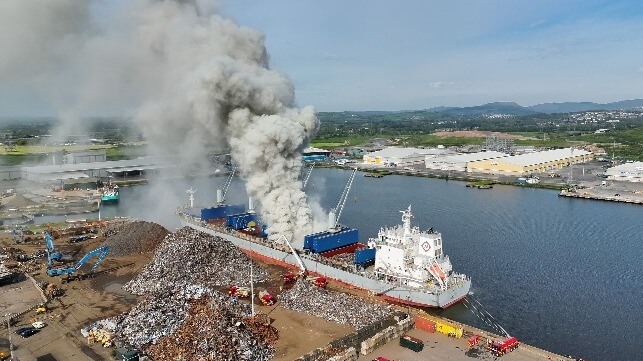
On Sunday, a scrap metal fire broke out aboard a bulker at the Newport Docks port complex in Wales, drawing a major emergency response to the scene. It was the latest in a long string of scrap fires, which have increased in frequency in recent years due to the prevalence of flammable contaminants like lithium-ion batteries.
According to the South Wales Fire and Rescue Service, the fire broke out early Sunday aboard the bulker Nord Houston, which was alongside at a recycling terminal at the Port of Newport. The agency responded to the scene with five pump trucks and two ladder trucks, plus specialized units and dozens of personnel. Fire boats aided the effort from the water side. They extinguished the fire later the same day, and stood a firewatch over night to guard against a reflash.
There was no risk to surrounding businesses and residences, and no injuries were reported, the agency said.
The shipowner and terminal operator have agreed on a plan for discharging the burned cargo, according to ABP, the next step in the salvage process. Firefighters will be on scene during that evolution to monitor the work.

that matters most
Get the latest maritime news delivered to your inbox daily.
Scrap metal cargoes are a significant risk for shipping due to the possibility of contaminants in the material. Because of the nature of the business, scrap often contains things that should not be included - like oily wastes and lithium ion batteries. Li-ion batteries have high potential for catching fire if damaged, and can ignite other flammables in the pile. The fires can burn for days, polluting the air and damaging the ship.
Steel cargoes can also be self-heating because the inevitable oxidation process (rusting) produces heat. The reaction accelerates as the cargo gets hotter, and can result in ignition in a tightly-packed cargo hold. Once ignition occurs, finely-divided steel (like shavings or turnings) will itself burn when the temperature gets high enough, according to technical consultancy Burgoynes.