
A Trickle of Hormuz Traffic is Diverting Into Iran's Territorial Seas
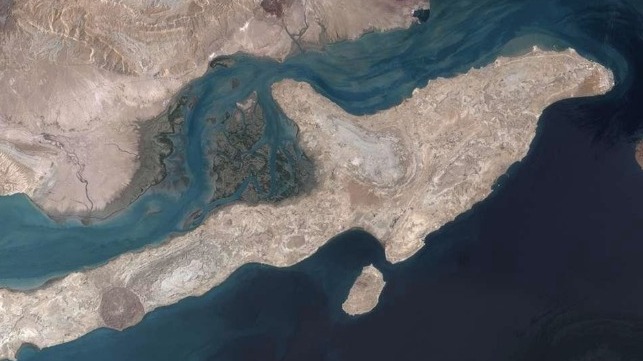
A trickle of vessel traffic is percolating through the Strait of Hormuz, particularly tanker voyages linked to Iran and outbound transits of vessels linked to India. Some of the traffic fits an unusual pattern: in broad daylight and broadcasting AIS, some outbound vessels are taking a route between the islands of Qeshm and Larak, well outside of the traffic lanes and deep within Iranian waters.
The location of the route appears to demonstrate a high degree of Iranian control over these specific transits. Qeshm's southern shore is home to an Islamic Revolutionary Guard Corps naval base, which was filled with small attack boats before the start of U.S.-Iranian hostilities. The new route passes in front of this base before passing through the narrow choke point between Qeshm and Larak, just five nautical miles wide at its narrowest point. At this distance, ships would have minutes at most to prepare for an incoming Iranian attack or boarding attempt.
If Iran wished to close this narrow gateway, it would be even easier to carry out than closing the rest of the strait, which is four times as wide and only half-surrounded by Iranian coastline. Since Iran has allowed select vessels through such a vulnerable choke point, the IRGC's stated "smart control" policy of picking and choosing vessels for approved transit may well be in effect.
CONFIRMED - Iran is allowing select vessels transit the SoH after verfication
— Martin Kelly (@_MartinKelly_) March 16, 2026
At least 4 vessels have transited outbound voa the Strait of Hormuz in the past 24hrs with a short diversion via the Larak-Qeshm Channel.
This appears to be a verification process whereby Iran… pic.twitter.com/csriocNo1h
More than a few commentators have noted a secondary benefit for Iran: this new route fully avoids the official traffic separation scheme and leaves the rest of the strait unused. If Iran has its own, well-controlled route to the north, it could mine the central waterway to the southeast of Larak and shut it down to non-approved traffic.
Iran is believed to have had thousands of mines of varying types in its inventory prior to the onset of hostilities, and the capability to deploy them from small craft and vessels of opportunity. The degree to which this capacity has been degraded is as-yet unknown, though U.S. Central Command says that it has prioritized eliminating Iran's naval assets.

that matters most
Get the latest maritime news delivered to your inbox daily.
One of Iran's primary reasons not to mine the Strait of Hormuz is that the mines would threaten its own shipping; if this risk can be circumvented with a separate, secure route past Qeshm, it could mine the TSS at will without hurting its own maritime interests - subject to operational constraints.
Iran need not be concerned with the risk of U.S. interference, at least for now. The U.S. is deliberately allowing Iranian-approved traffic to pass through, Treasury Secretary Scott Bessent said Monday. "The Iranian ships have been getting out already, and we’ve let that happen to supply the rest of the world," he told CNBC.