
Despite U.S. Demands, NATO Reluctant to Join Hormuz Mission
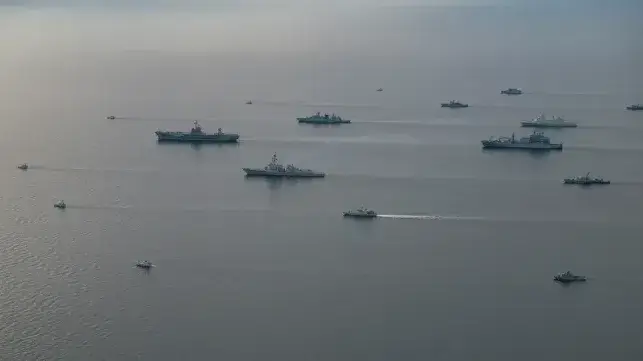
President Donald Trump has threatened NATO allies with a "very bad" future if they do not join in a proposed Strait of Hormuz naval escort mission, but so far there appear to be few takers. Having been excluded from the decision to go to war, and faced with the prospect of a complex fight in confined waters, some of Europe's leading powers are saying "no" in blunt terms; others are signaling that they will give the matter careful consideration, without a timeline.
The Strait has been shut since early March, driving up oil prices, initiating a slow-rolling wave of shut-ins in GCC oil production, and raising concerns about potential shortages in several dry bulk and refined-product commodities. With the financial Brent benchmark hovering near $100 per barrel and physical barrels for prompt delivery selling for more than $150 in Dubai, the Trump administration has been looking hard at ways to get the strait reopened with or without Iran's cooperation. Diplomacy appears unlikely for now: both the U.S. and Iran claim that the other side has attempted to initiate ceasefire talks, and that the attempts have been refused.
With hostilities ongoing, Trump has demanded that NATO allies step up to join the U.S.-Israeli-led conflict in support of freedom of navigation. Germany, which has Europe's largest military budget, has swiftly refused.
"We will not participate in ensuring freedom of navigation in the Strait of Hormuz by military means. The war in the Middle East is not a matter for NATO," Chancellor Friedrich Merz said in a brief statement Monday.
Likewise, Norwegian Prime Minister Jonas Gahr Store said that Norway has no intention of sending its frigates to the strait. "A war has begun there, and it is escalating with no end in sight," he said in a press conference Sunday. "We currently have no plans to conduct military operations there."
Top European Union diplomat Kaja Kallas suggested that an EU-sponsored mission in the strait would be up for discussion, but stopped short of making a commitment. "It is in our interest to keep the Strait of Hormuz open," Kallas told Politico on Monday. "That's why we are also discussing what we can do from the EU side. We have been in touch with the U.S. on many levels, but of course the situation is very volatile."
To some analysts, Europe's reluctance to fight in the Strait of Hormuz is simply a realistic acknowledgement of the odds, all politics aside. "If some European navies barely managed the Red Sea I have serious doubts they’d come out of Hormuz unscathed. No amount of political risk appetite can change this operational fact," commented Alessio Patalano, an East Asia specialist and professor of war studies at Kings College London.
The U.S. Navy has itself refused industry requests to provide naval escorts, citing the risks in the strait and the shortage of available warships, according to shipping-industry sources.
China, the world's largest navy by hull count, has given no signals yet. President Trump has threatened to delay much-anticipated talks with Chinese President Xi Jinping, currently scheduled for March 31, if China does not agree to join a Hormuz naval escort mission.

that matters most
Get the latest maritime news delivered to your inbox daily.
China has modern air defense destroyers and a support base in Djibouti to underpin regional deployments. It also has trade and defense ties with the Iranian regime, and continues diplomatic contacts with Tehran. So far, Beijing has not commented directly on Trump's request.
"We once again call on parties to immediately stop military operations, avoid further escalation of the tense situation and prevent regional turmoil from causing greater damage to global economic growth," said Chinese Foreign Ministry spokesperson Lin Jian on Monday. "We are in communication with relevant parties to work for the de-escalation of the situation."