
Hapag and India Plan Cooperation for Reflagging Ships, Recycling, and Ports
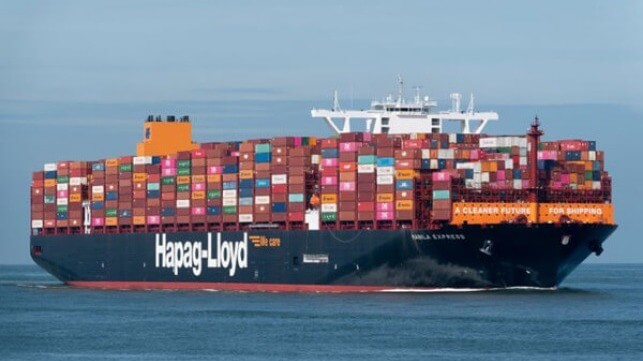
Hapag-Lloyd has become the latest among the largest carriers to map out a strategy of cooperation and expansion with India. The liner company reports it already has six dedicated services that include India and that it aims to grow volumes handled in the India area to around 3 million TEU by 2030.
India has been anxious to attract the major carriers as part of its strategy to expand its maritime related industries. It hopes to attract the lines to build and repair ships in India, but it also made changes to its cabotage regulations and announced plans for building domestic carriers. CMA CGM has reflagged ships and ordered feeder ships to be built in India, while both Maersk and MSC reflagged ships and said they were exploring opportunities.
“India is one of the most important growth markets in global trade and a key strategic partner for Hapag-Lloyd,” said Rolf Habben Jansen, CEO of Hapag-Lloyd.
Hapag reports it signed three Letters of Intent to deepen its cooperation and participation in India. Like the other major carriers, it says it intends to reflag up to four vessels under the Indian registry. However, it says there is no specific timeline or vessel profile, and that it would be subject to commercial considerations and further discussions. Reflagging requires using Indian officers and crew but opens the domestic Indian market for the carriers.
Another focus includes cooperation on the development of a ship recycling ecosystem in India. Alang, India, is well-known for its breaker operations, but so far has not moved to be incompliance with international and EU regulations on elements such as safety and environmental management. Hapag says the intended cooperation aims to support the development of recycling capacity in India, aligned with the EU Ship Recycling Regulation (SRR). Hapag says the envisioned ecosystem could provide capacity for recycling up to 100 vessels.
It also foresees discussions on a strategic cooperation related to the development of Vadhavan Port in collaboration with the Jawaharlal Nehru Port Authority. Located about 100 miles north of Mumbai, it is seen as one of India’s major upcoming infrastructure projects.
“India’s port and logistics infrastructure is developing at remarkable speed and scale,” said Dheeraj Bhatia, CEO of Hanseatic Global Terminals and member of the Hapag-Lloyd Executive Board. “Projects such as Vadhavan Port have the potential to significantly strengthen India’s role in global supply chains.

that matters most
Get the latest maritime news delivered to your inbox daily.
Vadhavan Port is expected to play an important role in strengthening the country’s maritime logistics network. Hapag-Lloyd intends to contribute its global shipping and terminal expertise to support this development.
Hapag already has a strategic investment in J M Baxi, a private company that operates terminals and inland transport in India.