
NTSB: Bulker Grounded Due to “Expectation Bias" and Lack of Communications
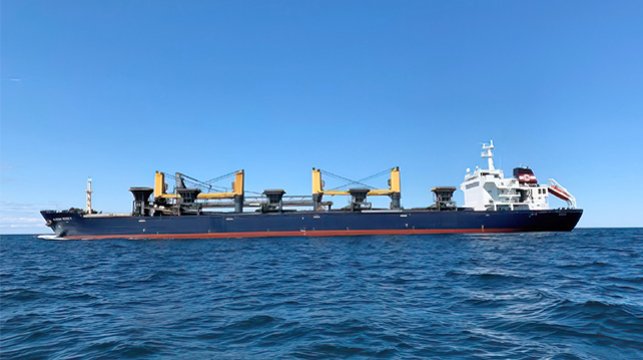
The National Transportation Safety Board released its final report on the grounding of a bulker near Philadelphia in the Delaware River, saying it believes the pilot made errors based on his expectations instead of what was actually happening with the vessel. Further, it cites poor communications as part of the lack of bridge resource management.
The incident happened on the evening of January 8, 2025, as the Algoma Verity (50,259 dwt), a modern self-unloader bulker, was transiting north on the Delaware River with a cargo of salt. The ship had held about 12 miles downriver from Philadelphia, waiting for tidal conditions so that it would have a slack/high tide when it reached its terminal about 22 miles upriver from Philadelphia. Visibility was good, but there was a gusty wind reaching up to 22 knots, and the ship was mostly moving after evening twilight.
The first pilot during the transit reported the ship was “handling like a deep-draft ship,” reports the NTSB. He warned the second pilot, who took over the trip, that the vessel “needed a lot of rudder to steer” and to start turns early and check the swing early. The second pilot told the NTSB he found the Algoma Verity difficult to handle. He thought the ship naturally wanted to “dive to port.” It appears he did not discuss that with the master or bridge crew.
The NTSB concludes that this created a bias in the pilot’s mind and that he acted on these expectations as opposed to how the ship was behaving at the moment. They also found there was relatively little communication between the pilot and the master or the bridge crew.
By the time the vessel reached the Walt Whitman Bridge, which crosses the Delaware, it was already slightly outside the channel to starboard, but the pilot said that was acceptable due to river depth. He was also expecting that a bend in the river and a flood current would push the vessel to port.
At 1812 the vessel’s bow was 290 feet outside the channel when it began to slow, and the pilot said he heard a “rumble.” The master reported a “jerk.” The ship grounded at 1814, but the tug and pilot were able to keep it moving and prevent it from getting stuck.
Over the next few minutes, the master repeatedly expressed concern about the ship’s position outside the channel. It was making about 6.5 knots, and the master pointed out a red channel buoy to which the pilot again said the ship would be fine. At 1829, the ship went hard aground. They would find that four ballast tanks and a fuel tank were flooded with river water, and the ship sustained an estimated $6.6 million in damages. It would take three days to refloat the vessel.
The NTSB found several conditions that contributed to the grounding. They concluded the ship was likely squatting when it was making 9 knots in the river with a 38.5-foot draft. The pilot was expecting a tidal current near the Ben Franklin Bridge that he thought would push the ship toward port. The NTSB believes, based on conditions, that the current was likely weaker than predicted. The wind was likely having more effect on the vessel because of the hoppers and cranes in the unloading system.
They found, based on expectations, that the pilot was likely overcompensating and maneuvered the vessel outside the channel. The lack of communication and good bridge resource management is cited when unexpected actions or deviations occurred; the NTSB says they should have been discussed between the crew and pilot. They say that it would ensure a mutual understanding of the situation and could prevent unrecoverable errors.
that matters most
Get the latest maritime news delivered to your inbox daily.
The master told the NTSB that he was about to take the conn from the pilot when the second grounding began. It was 45 seconds before the ship was at a full stop, and the reaction was coming too late.
The NTSB concludes that good communications and bridge resource management would help manage against the expectation bias. It also calls for training that reinforces active questioning of factors in the operational environment.