
Op-Ed: End in Sight for the Strait of Hormuz Blockade
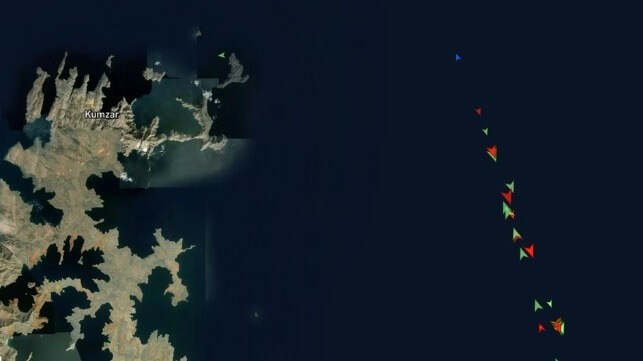
One doesn’t want to sound too sharp and all-knowing, nor does one want to telegraph to the enemy any warning on which he can act. But after ten days of war, the shape of the end-game is beginning to take shape, even if both Israel and the United States (collectively the alliance) have said that a conclusion of the war is not yet imminent.
Even if the task may not yet be complete, the alliance has the wherewithal to complete the destruction of both Iran’s nuclear programme and its ballistic missile fleet. Some components may still be unscathed, buried deep underground or as yet undetected (most unlikely, given the comprehensiveness of alliance intelligence coverage). But with local air supremacy established, such that vulnerable refueling operations and unimpeded drone surveillance are now taking place close in to Iranian airspace, the alliance has a range of offensive measures it can take to neutralize what remains. These may not be risk-free operations, but the alliance has the will and the means to achieve this particular aim.
The alliance may not have commonality of aim when it comes to what has been loosely described as regime change in Iran. While President Trump may want to vet the selection of the next Iranian Supreme Leader, Israel has a more ambivalent ambition: it wishes to ensure that whoever the next supreme leader may be, he doesn’t have the means to threaten Israeli national security or survival.
As the war has progressed, the feasibility of achieving regime change has diminished. What is emerging as a likely outcome is more likely the sort of end-state envisaged by Israel: a leadership in Iran so stripped of revenues and infrastructure, with dramatically shrunken defense and war-fighting capability, and faced with such enormous domestic challenges over fuel, food and water, that any form of overseas adventurism would become impossible.
To achieve this end state may require further massive destruction within Iran, and thereafter the means to maintain pressure – for example, by imposing a no-fly-zone and controlling Kharg Island, through which 90% of Iran’s oil and gas exports used to flow. Even if hardliner IRGC elements retained titular leadership, authority in these constrained circumstances would inevitably fall away, as ordinary Iranians blamed their plight on those who brought them into it. Regime change would then be in the hands of the Iranians themselves.
Next, Iran's drones. While the preparation for conflict of both the conventional regular Navy (Nedaja) and the IRGC Navy (Nedsa) can reasonably be assessed as inept, that of the IRGC Aerospace Force is in sharp contrast. Drones have been accurately targeted, the number of attacks launched every day has been maintained, and the IRGC’s decentralized command and control system has so far been effective. Real damage has been done, and although there have been no catastrophic infrastructure failures, the fear of such has been contagious.
But while the situation looks bleak, in reality, the tide here is turning. The GCC government and civil defense response has been robust. The maritime and port response has been excellent. Air defense techniques and capability are improving all the time, bolstered by external support from some perhaps unexpected quarters. IRGC Aerospace Force launch and storage sites, such as those in the IRGC Navy base in Bushehr, are steadily being attrited, all without prospect of regeneration. As the IRGC Aerospace Force modus operandii is revealed in each sortie it mounts, so too can it be analyzed, identified and targeted. Just as the Saudi performance against Houthi missile and drone attacks improved over time as experience was gained, so too will the effectiveness of GCC defensive counter-drone operations improve.
Finally, the Straits of Hormuz. By the time this article is published, the USS Gerald Ford may have made her way through the Bab el Mandeb into the Gulf of Aden, accompanied by her carrier strike group. If ever an exercise were needed to show that there are military means available to maintain freedom of navigation, then this would be such a demonstration. Within days, operations to neutralize Iranian anti-shipping capability in the Strait of Hormuz should culminate, to the extent that convoy operations should become feasible.
Convoy operations will entail having active optical and electronic surveillance overhead, with an immediate response capability, covering potential mobile launcher firing points along at least 250 miles of Iranian coastline and its hinterland, from Abu Musa in the West to Jask in the East. A minesweeping capability will be needed, and the means to keep a swept channel clear. Shipping channels will also have to be kept completely clear of small craft and fishing boats, which the Iranians could use both for cueing long-range strikes and for mounting close-quarter physical attacks.

that matters most
Get the latest maritime news delivered to your inbox daily.
Lastly, one needs naval vessels to provide close-in electronic counter-measures, detection and intercept protection for merchant vessels making the transit. The fewer the ships available, the less frequently convoys can be mounted. No solution will be without risks. But if European countries make it through the Red Sea with the naval reinforcements being spoken of, then convoying becomes easier. The timetable for all this will be set by Admiral Brad Cooper, Commander CENTCOM, and no plan will float unless it is also approved by the Omanis, in whose territorial waters the better part of the Strait of Hormuz sits.
There is cause for optimism.
The opinions expressed herein are the author's and not necessarily those of The Maritime Executive.